TL;DR
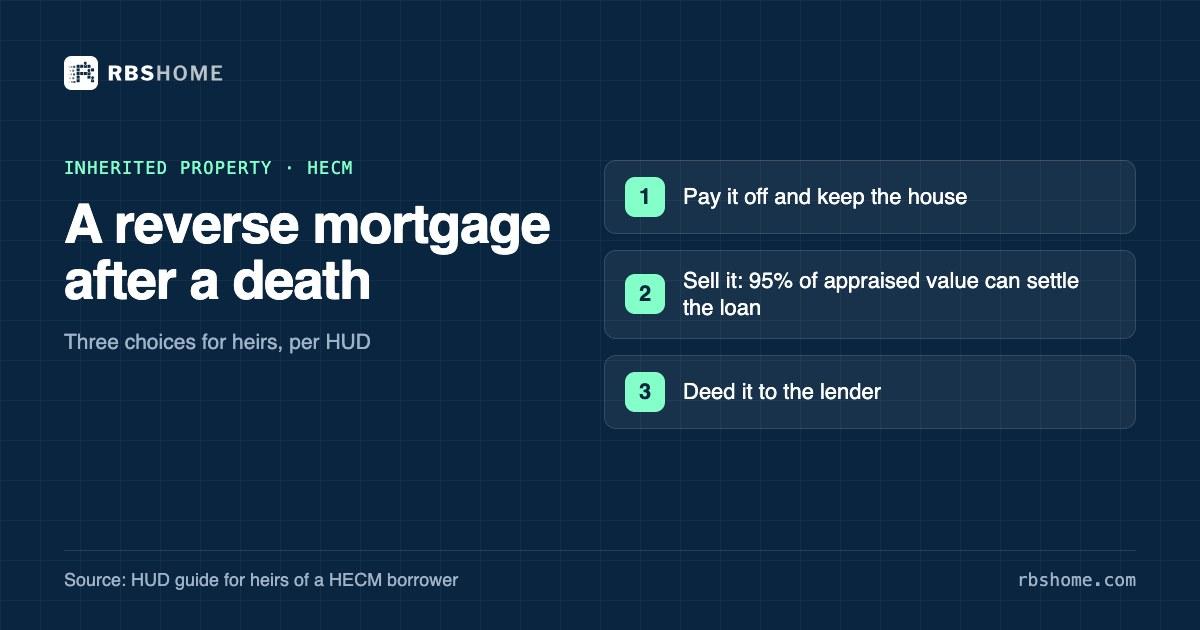
A HECM reverse mortgage comes due when the last surviving borrower dies. Heirs can pay it off and keep the house, sell it and keep any equity, or hand it to the lender. If the house is worth less than the loan, HUD lets heirs sell for at least 95 percent of the appraised value and the lender takes the net proceeds as payment in full. Timelines are short, so contact the servicer right away.
Why the loan comes due
HUD describes a Home Equity Conversion Mortgage, or HECM, as a reverse mortgage insured by the Federal Housing Administration. This guide is about HECMs. The borrower makes no monthly payments while living in the house. Interest and fees are added to the balance instead.
According to HUD's guide for heirs, the balance becomes due and payable when the borrower sells the home, stops living in it as their primary residence, or when the last surviving borrower dies. At that point no more money can be drawn from the loan.
For a family in Dallas or Collin County, that means a house that may have plenty of equity, or very little, and a servicer who now wants to be paid.
The three choices heirs have
The CFPB and HUD describe the same three paths:
- Keep the house. Pay off the full loan balance, with savings or a new mortgage in an heir's name.
- Sell the house. Repay the loan from the sale. If the house sells for more than the balance, the heirs keep the difference.
- Hand it back. Sign the house over to the lender with a deed in lieu of foreclosure. This avoids a foreclosure sale when there is no equity worth saving.
Before you pick one, you still need someone with legal authority to act. If there was a will, that is usually the executor once a court appoints them. If there was no will, the heirs may need an affidavit of heirship or a court order through probate. Our guide to probate, heirship affidavits and small estate affidavits explains each route, and who inherits when there is no will covers the shares.
The 95 percent rule
Reverse mortgage balances grow every month. After many years, the balance can be larger than the house is worth.
HUD's guide says that if the loan balance is more than the home is worth, the estate or heirs may sell the home for at least 95 percent of the current appraised value, and the lender will accept the net proceeds as satisfaction of the loan. The CFPB adds that the shortfall is covered by the mortgage insurance the borrower paid during the loan.
HUD also says any transfer after death counts as a "sale" for this rule. So an heir who wants to keep the house can buy it at 95 percent of the appraised value rather than paying a larger balance.
Ask the servicer how they will set the appraised value
The 95 percent figure is based on a current appraisal. Ask the servicer how they order it, and if you think it is wrong because of the house's condition, send photos and repair bids.
How much time heirs get
This is where families get caught out. HUD's guide says the loan must be satisfied within 30 days of the borrower's death. The lender may approve 90-day extensions if the heirs give satisfactory documentation that they are actively trying to sell the house or repay the loan.
The CFPB describes it from the notice side: after receiving a due-and-payable notice, heirs have 30 days to buy, sell or turn the home over to the lender, and the timeline might be extended up to six months.
Practical points:
- Do not wait for probate to finish before calling the servicer. Ask what they need now.
- Put requests in writing and keep copies. Send a listing agreement, a signed sale contract or a loan pre-approval when you ask for an extension.
- Keep paying taxes and insurance if you can. HUD's guide says they remain the estate's responsibility until title is transferred.
A surviving spouse who was not on the loan
A spouse who was not a borrower may be able to stay. HUD's guide says special provisions may postpone repayment and let a non-borrowing spouse remain in the home for life, but the spouse must give the lender a Non-Borrowing Spouse Certification within 30 days of the last surviving borrower's death, among other requirements. If this applies to your family, contact the servicer and a HUD-approved housing counselor right away.
Steps for the first 30 days
- Call the servicer and send the death certificate. Ask for the payoff amount, the due date, and what they need from the estate.
- Decide who can sign for the estate. Work out with a probate attorney and title company who has authority to sell: an executor, an administrator, or the heirs.
- Get a value. Order an appraisal or get offers, so you know whether the house is worth more or less than the loan.
- Ask for extensions in writing. If you are selling, send the servicer the listing or contract and ask for more time.
- Choose pay off, sell or deed in lieu. Pay the loan to keep the house, sell it and keep any equity, or sign the house over to the lender.
If you sell, the title company pays the reverse mortgage at closing from the proceeds, along with any property taxes due. Our guide to Texas closing costs shows what else comes out of the proceeds.
RBSHome buys inherited houses as-is in Dallas County and Collin County, including houses in Garland, Richardson and Plano. We can give you a written offer and a closing date that you can send to the servicer with your extension request.
This article is general information, not legal or financial advice. Reverse mortgage rules and servicer practices change. Confirm your deadlines with your servicer, a HUD-approved housing counselor or a Texas attorney.
Written offer, usually within 24 hours. Useful proof of a pending sale for your servicer.
Sources
- U.S. Department of Housing and Urban Development, "Inheriting a Home Secured by an FHA-insured Home Equity Conversion Mortgage": hud.gov
- Consumer Financial Protection Bureau, "With a reverse mortgage loan, can my heirs keep or sell my home after I die?": consumerfinance.gov